Deep Engineering
IoT Development
Firmware, edge computing, and cloud dashboards for connected devices, from industrial sensors to consumer smart products.
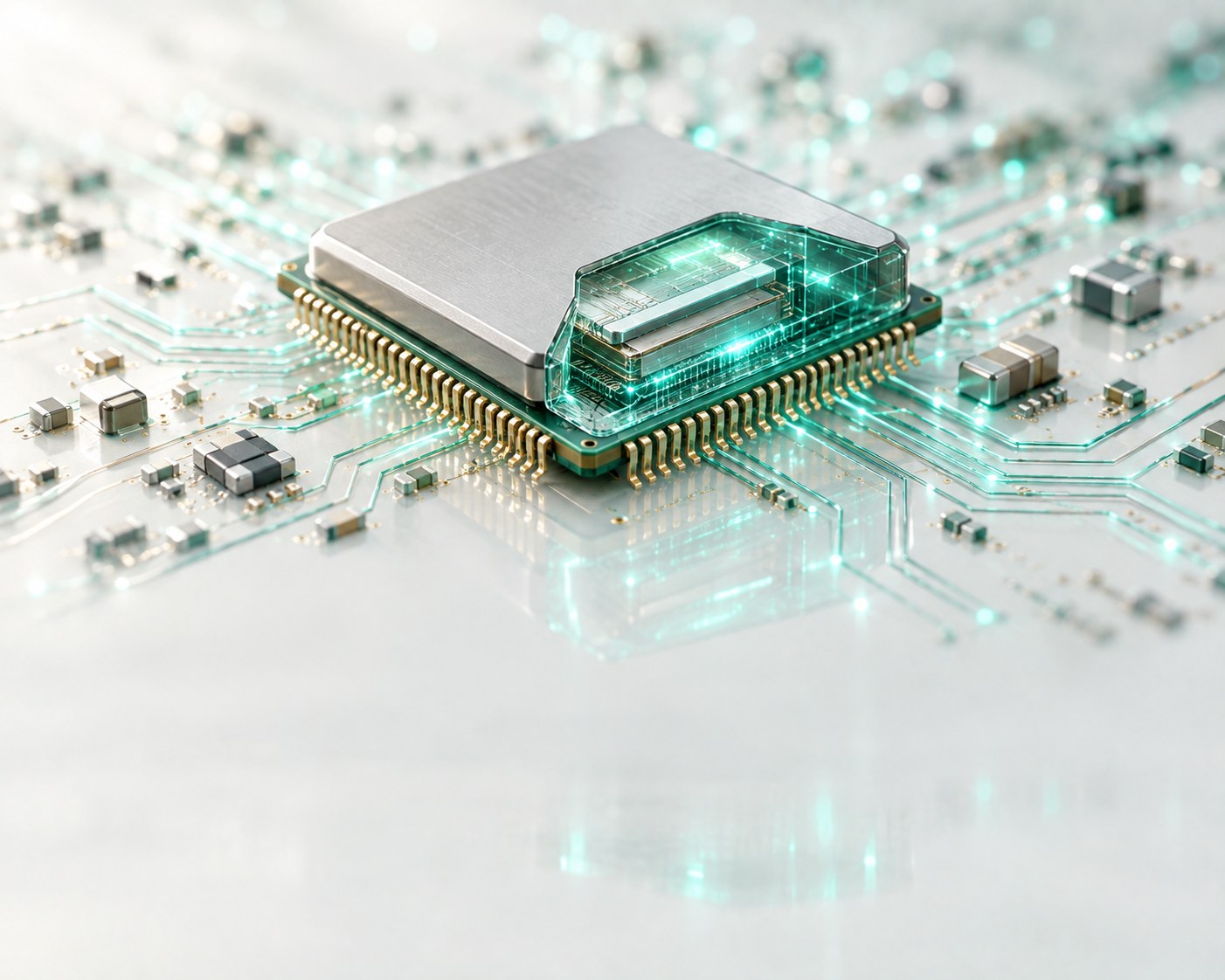
Firmware, edge gateways, and realtime telemetry dashboards.
- Live visibility into every device
- Updates shipped over the air
- Fleet data feeding real dashboards
The problem
Your devices are out in the field but your data is stuck inside them.
Connected products fail in ways ordinary software does not: a device in a basement with a weak signal, a battery that has to last a year, a firmware update interrupted by a power cut. Building for that means treating the device, the network and the cloud as one system.
The work covered here is the software side: firmware for microcontrollers and embedded Linux boards, secure connections to a cloud backend, and the dashboards and alerts that let you see a whole fleet at once.
What you receive
What a project produces.
Device firmware
Code for your microcontroller or embedded board that reads sensors, controls hardware and handles faults.
Connectivity
Reliable communication over Wi-Fi, cellular, LoRa or Bluetooth, with reconnection and buffering when the link drops.
Device identity and security
Unique credentials for each device, encrypted communication and signed firmware.
Over-the-air updates
A way to ship fixes to devices in the field, with rollback if an update fails.
Cloud ingestion
A backend that receives, stores and processes device data at your expected volume.
Fleet dashboard and alerts
Live status of every device, history charts, and notifications when readings go out of range or a device goes silent.
How we approach it
The positions we take.
Design for the bad day
Lost connections, low power and interrupted updates are tested deliberately, before devices reach a customer.
Security from the first device
Per-device keys and signed updates are cheap at the start and very hard to add to devices already in the field.
Prove it on a small fleet
Before a large production run, we run the system on a pilot batch and study real field data.
How it runs
Four steps, from the first call to hand-over.
1
Requirements and architecture
We write down the hardware, power, connectivity and fleet size, and design how device, network and cloud fit together. You receive a fixed quote for the first phase.
2
Prototype on the bench
Firmware and the cloud connection run on your real hardware, with fault cases such as dropped links and low power tested on purpose.
3
Pilot fleet
A small batch of devices runs in real conditions. We watch the data, fix what the field reveals, and prove the update process.
4
Production and hand-over
The firmware, the programming procedure, the cloud environment and the dashboards are handed over with documentation.
Is it a fit
When we are the right people, and when we are not.
A good fit
- You have a device or a sensor network and need the software around it.
- Devices must run unattended for months.
- You want remote updates and visibility across the whole fleet.
Another route is better when
- The core hardware is still undecided. Settle that first.
- You need radio or safety certification handled for you. That is done by accredited labs, though we prepare the software side for it.
- You need units manufactured and programmed. Your manufacturer does that, and we supply the firmware and the programming procedure.
What we ask on the first call
- What hardware is chosen, and who supplies it?
- How is each device powered and connected?
- How many devices are there now, and how many in a year?
- What must happen when a device loses its connection?
- How will devices be updated once installed?
Questions
About Internet of Things.
Something missing? Write to [email protected] and an engineer will answer.
Which boards and chips do you work with?
We work with common microcontrollers and embedded Linux boards. The list depends on your project: tell us what you have and we will say whether we are the right fit.
How do you secure devices?
Each device gets its own credentials, communication is encrypted, and updates are cryptographically signed, so a device only accepts firmware you released.
Can devices be updated remotely?
Yes. We build over-the-air updates with rollback, so a failed update does not leave a device unusable.
Can we use our existing cloud?
Yes. We can connect to a cloud you already use, or set up a new environment in your own account.
Often paired with these disciplines.

Describe what you need.
Describe the problem in plain language. An engineer reads every inquiry and replies within one business day, with a written scope and fixed price before you commit to anything.
- Reply
- Within one business day
- First call
- Free, no commitment
- Confidentiality
- NDA on request, before you share anything
- [email protected]