Product Development
Mobile App Development
We design and ship mobile experiences your users love, cross-platform or fully native, with offline support, push notifications, and store-ready polish.
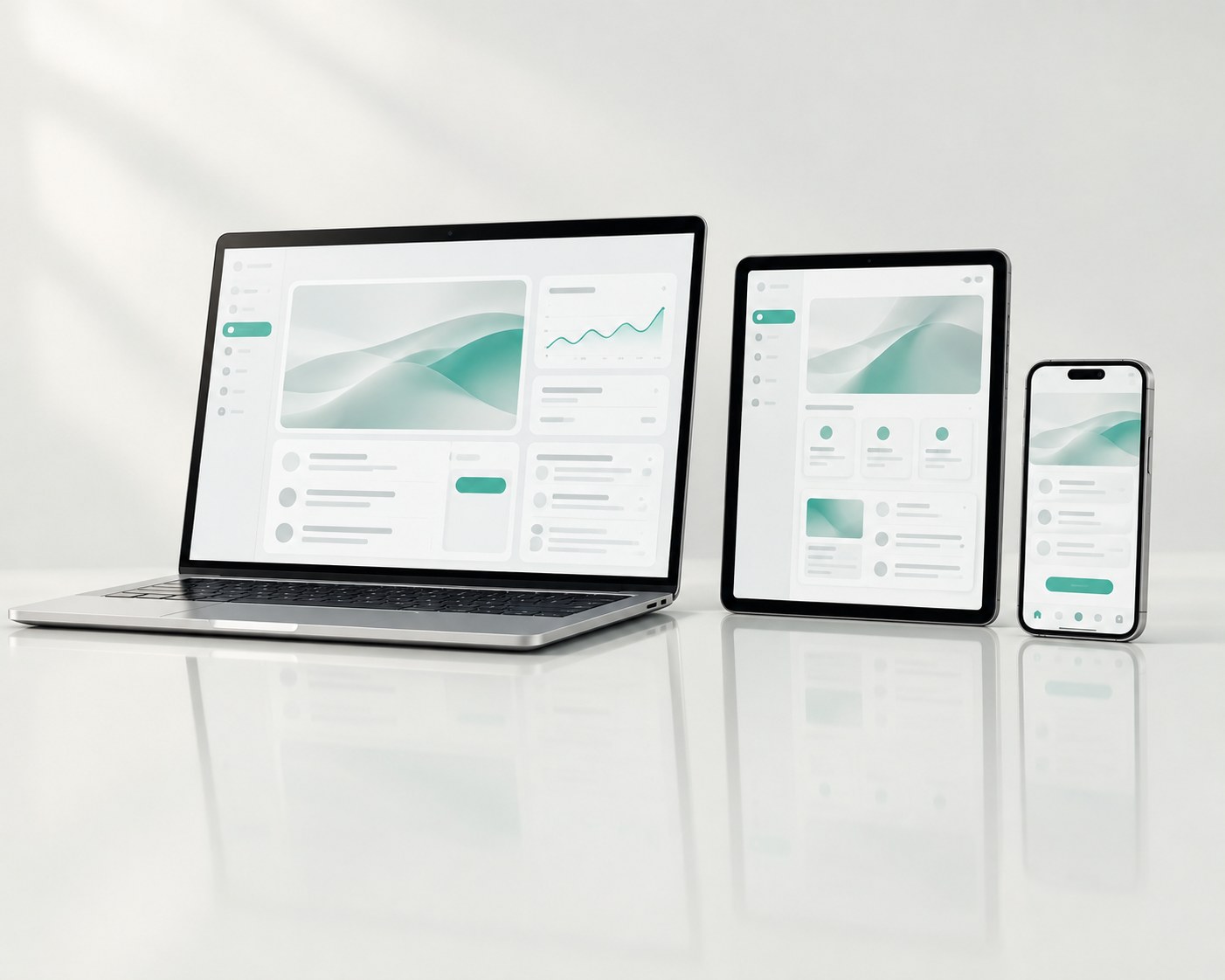
iOS and Android apps, native or cross-platform, shipped to the stores.
- Your product on both app stores
- Works offline, syncs when back online
- Notifications that bring users back
The problem
Your customers live on their phones but your business isn't there.
Most mobile projects begin with the question of native or cross-platform, and we answer it from your requirements. If the app is mostly forms, lists and content, one cross-platform codebase gets you onto both stores faster and costs less to maintain. If it depends on heavy graphics, on-device processing or deep platform features, separate native code is the better investment.
Either way, we handle the parts of mobile that take time: store review rules, push notification delivery, sign-in, offline behaviour and the release process. The app reaches your users and keeps working through OS updates.
What you receive
What a project produces.
Scope and flows
The screens, permissions and offline rules written down and agreed, before design and build begin.
The app for iOS and Android
One codebase or two, depending on the decision above, built to follow each platform's design conventions.
Offline behaviour
Local storage and sync rules, so the app stays usable without a connection and settles conflicts predictably when it reconnects.
Push notifications and deep links
Notifications set up on both platforms, with the permission prompts and links that take users to the right screen.
Backend and accounts
Sign-in, user data and an API for the app to talk to, unless you already have one.
Store submission
App Store and Google Play listings, privacy declarations, screenshots, and the fixes needed to pass review.
How we approach it
The positions we take.
Decide native or cross-platform on evidence
We prototype the hardest screen or feature first. If it runs well in a cross-platform framework we continue there. If it does not, we find out before most of the budget is spent.
Test on real devices
Simulators miss slow networks, low memory and older phones. We test on physical devices across a range of OS versions.
Plan for OS updates
Apple and Google change their requirements every year. The app is written against current APIs and the release process is documented, so updating it is routine.
How it runs
Four steps, from the first call to hand-over.
1
Scope and prototype
We write down the flows and permissions, then prototype the hardest feature on a real phone. The result decides the technology and gives you a fixed quote.
2
Build in weekly slices
Each week you receive a build through TestFlight and Google Play internal testing, so you use the app on your own phone instead of watching a screen share.
3
Beta and fixes
A test group uses the app on their own devices. We fix crashes and rough edges, and prepare the store listings and privacy declarations.
4
Release and hand-over
We submit to both stores, answer any review feedback, and hand over the source code, signing keys and store accounts in your name.
Is it a fit
When we are the right people, and when we are not.
A good fit
- Your customers or staff would use the product mostly on their phones.
- You need iOS and Android and want to control cost by sharing code where it makes sense.
- You need features such as offline use, notifications or the camera.
Another route is better when
- A responsive website would do the job. It is faster to build and needs no store approval.
- You need a game with a custom 3D engine. That is a different specialism.
- You expect the app to be published under our developer accounts. Store accounts stay in your name.
What we ask on the first call
- Which platforms do your users actually use?
- What must keep working without a connection?
- Which phone features does it need: camera, location, Bluetooth, notifications?
- Do you already have a backend or an accounts system?
- Who will hold the App Store and Google Play accounts?
Questions
About Mobile App Development.
Something missing? Write to [email protected] and an engineer will answer.
Native or cross-platform: which will you recommend?
It depends on the app. For most business apps a cross-platform framework is a sound choice. We test the hardest feature first and tell you which route the evidence supports.
How long does store approval take?
Reviews often finish within a few days, but the timing is set by Apple and Google and can vary. We submit early in the schedule for that reason.
Will the app keep working after new iOS and Android versions?
Major OS releases sometimes need changes. That is a normal part of owning a mobile app, and we can cover it under a support agreement.
Can you add an app to my existing website or system?
Yes. If your system has an API we use it, and if not we build one. We assess this in the first phase.

Describe what you need.
Describe the problem in plain language. An engineer reads every inquiry and replies within one business day, with a written scope and fixed price before you commit to anything.
- Reply
- Within one business day
- First call
- Free, no commitment
- Confidentiality
- NDA on request, before you share anything
- [email protected]