Product Development
Web Development
From marketing sites to complex SaaS platforms, we build responsive, SEO-optimized web applications engineered for performance, accessibility, and scale.
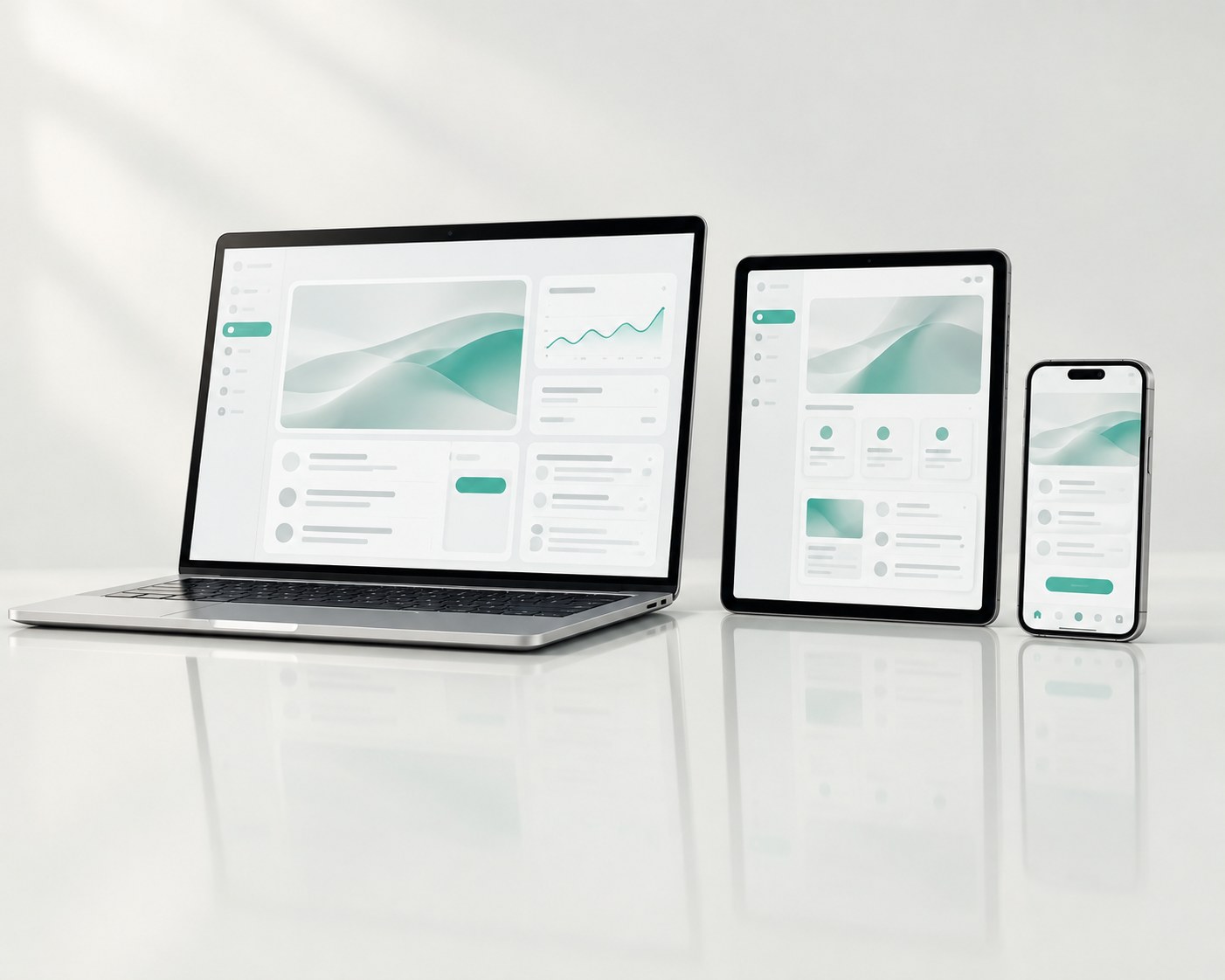
SaaS platforms, customer portals, and e-commerce builds.
- A platform that scales with your customer base
- Pages that load fast and rank well
- One codebase your team can maintain
The problem
Your operations have outgrown spreadsheets and off-the-shelf tools.
Most web projects we take on start with a process that already works badly: orders tracked in a shared sheet, approvals done over email, a customer portal that is really a folder of PDFs. We turn that process into software your team and your customers log into, with the rules of your business written into it.
We build on well-supported frameworks and standard databases, so any competent developer can pick the codebase up later. Performance, accessibility and search visibility are part of the build from the first page, because they are much harder to add at the end.
What you receive
What a project produces.
Scope and user flows
A written scope with the screens, roles and rules agreed before the build starts, so the price and timeline rest on something specific.
The application frontend
Responsive interfaces that work on phones and desktops, with keyboard and screen-reader support built in from the start.
Backend and API
Sign-in, permissions, business logic, and an API documented well enough for another team to use.
Data model and migrations
A database designed around your real entities, with every change to its structure kept under version control.
Payments, email and integrations
Checkout, transactional email, and connections to the systems you already run, such as accounting, a CRM or shipping.
Deployment and monitoring
A production environment, a repeatable release process, error tracking and backups, handed over with a written runbook.
How we approach it
The positions we take.
One deployable application first
We start with a single, well-organised application and split it into services only when a measured constraint calls for it. Early microservices cost a small team more than they return.
Performance is budgeted
Each type of page gets a load-time budget that we test against during development, so speed is not something we hope to fix after launch.
Your team can read it
Conventional structure, plain naming, and a README that explains how to run, test and deploy. The test is whether a new developer could ship a change in their first week.
How it runs
Four steps, from the first call to hand-over.
1
Scope
We write down users, roles, screens and business rules, and list what is out of scope. You receive a fixed-price quote against that document.
2
Design and foundations
Wireframes for the main flows and the data model, reviewed with you. The repository, environments and deployment are set up so the first demo runs on a real URL.
3
Build in weekly slices
Each week ends with a working demo on a staging site. You see real screens with real data and tell us what to change while it is still cheap.
4
Launch and hand-over
Production release, monitoring, backups, documentation and a walkthrough for your developers. The repository and the hosting accounts are in your name.
Is it a fit
When we are the right people, and when we are not.
A good fit
- You have a process that runs on spreadsheets, email or a tool you have outgrown, and you can describe how it should work.
- You need something customers or staff will use every day, and you want to own the code.
- You want a fixed price for a first version and a plan for what follows.
Another route is better when
- You need a simple brochure site that a website builder would serve well. That is the cheaper route, and we will say so.
- You need a large team working in parallel for many months. Focused builds are where we do our best work.
- The requirements are unknown and nobody on your side can answer questions or make decisions.
What we ask on the first call
- Who uses this first, and what do they do today instead?
- Which rules or approvals must the software enforce?
- What data already exists, and where does it live?
- Which other systems does it have to talk to?
- What would make the first release a success, in your own words?
Questions
About Web Development.
Something missing? Write to [email protected] and an engineer will answer.
Can you take over a website or app that someone else built?
Yes. We start with a review of the code, the hosting and the data, and give you a written assessment. Sometimes the right advice is to keep what exists and fix parts of it, and we will say so.
Who owns the code and the hosting accounts?
You do. The repository is in your organisation from the first commit, and production accounts are opened in your name.
Will the site rank in search?
We build the technical basics: fast pages, clean markup, sensible URLs, sitemaps and correct metadata. Rankings also depend on content and competition, which nobody can promise.
What happens after launch?
We can stay on under a support agreement, or hand over fully with documentation. The terms are agreed before work begins.

Describe what you need.
Describe the problem in plain language. An engineer reads every inquiry and replies within one business day, with a written scope and fixed price before you commit to anything.
- Reply
- Within one business day
- First call
- Free, no commitment
- Confidentiality
- NDA on request, before you share anything
- [email protected]